Abstract
Social media (SoMe) is an interactive communication type that uses computers (smart phone, tablet, notebook) and internet based technologies. With SoMe, ideas, videos, pictures and files can be easily shared; instant communication and cooperation can be installed with people in distant places. Twitter, Facebook, Instagram and Youtube are highly efficient SoMe tools for information sharing. These sharings can be national or international level. In recent years, SoMe tools have provided quite good opportunities for communication between colleagues on behalf to increase patient-physician communication as well as vocational education and skills in medicine. Because, to reach big centers and experienced trainers for a good education is mostly difficult and labored due to time, cost and language problems. However, thanks to SoMe tools, this problem can be partially solved. Dermatology and dermatopathology are the most appropriate medical fields where these tools can be used for visual education. In this article, we wanted to share the clues by making the awareness that SoMe tools can provide positive contributions to vocational education and communication, and by emphasizing the importance of the use of SoMe tools in increasing the experience of practitioners in dermatology and dermatopathology education and practice in these fields.
Keywords: Social media, dermatology, dermatopathology, education, communication, collaboration
Introduction
Social media (SoMe) is a type of communication that includes interactive platforms that use computers (smartphone, tablet, desktop) and web-based technologies. Providing instant communication among people regardless of the distance, SoMe allows easy sharing of information, ideas, files, pictures, and videos, as well as group collaboration. SoMe tools, particularly Twitter, Facebook, Instagram, and Youtube, are highly efficient in online communication and information sharing (1,2). In addition, sharing can occur at the national or international level. In recent years, the use of SoMe tools in medicine has offered great opportunities for healthcare professionals to interact with their patients and colleagues (2,3).
In this article, the use of SoMe tools in the practice of dermatology and dermatopathology was described, the importance of case presentation-based learning was emphasized, the tips for using SoMe was mentioned and raising awareness about using SoMe tools more effectively in the field of dermatology and dermatopathology in order to increase the professional experiences of colleagues was also aimed.
How SoMe Tools Can Be Used in Dermatology and Dermatopathology
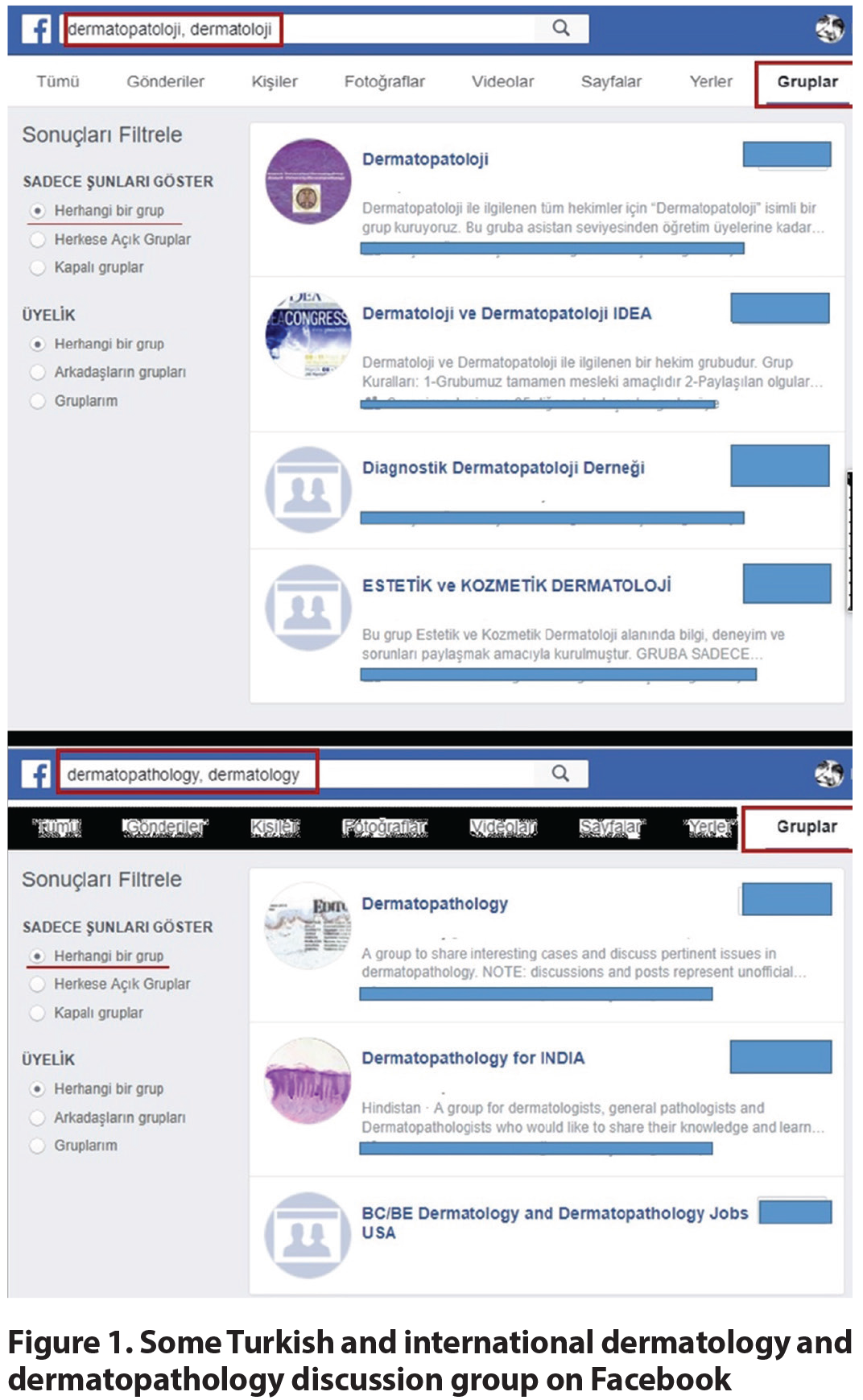
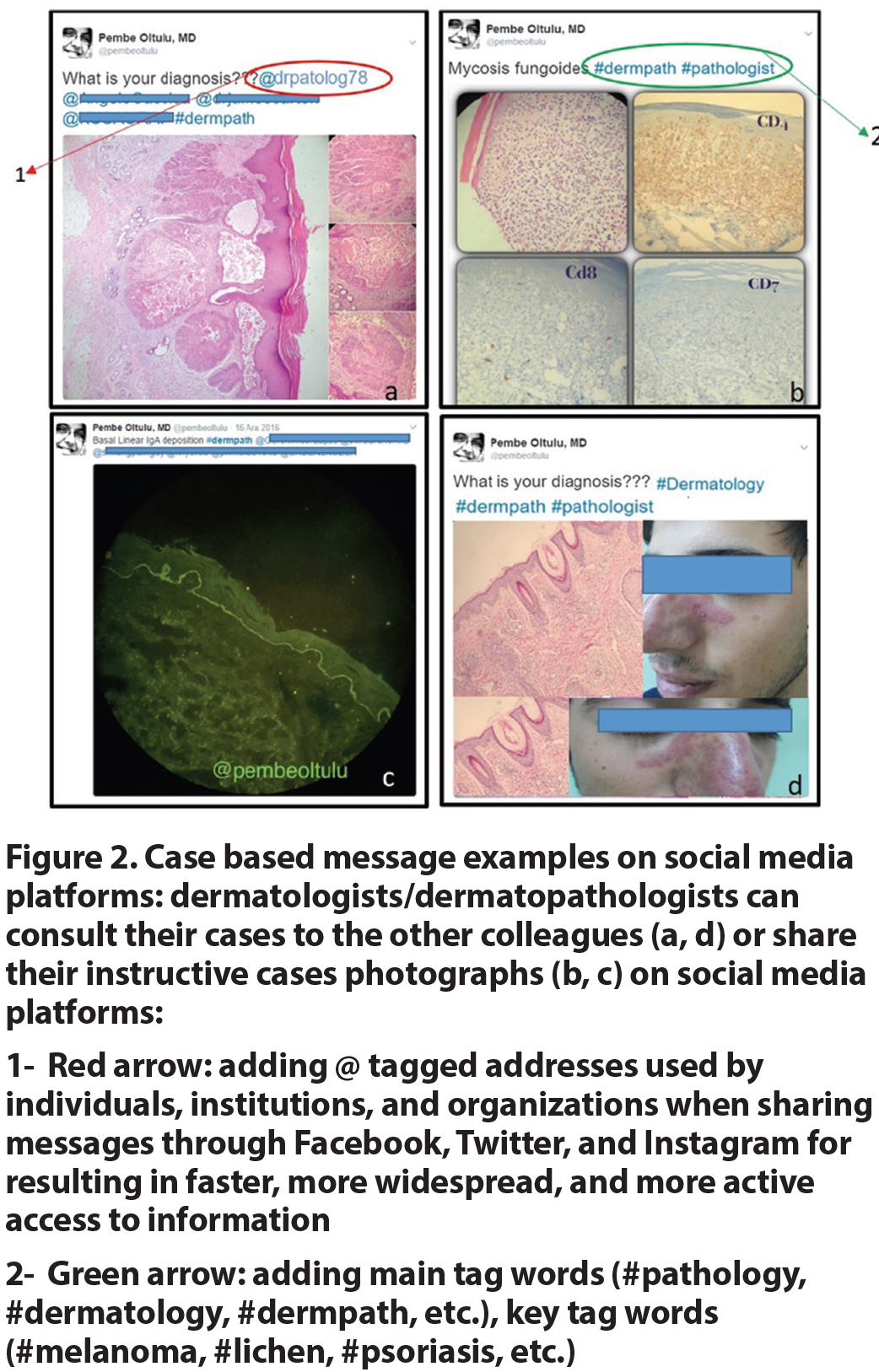
Colleagues can be consulted on difficult cases. Twitter, Facebook, and Instagram are the most frequently used platforms for this purpose. A case can be shared in popular dermatology and dermatopathology groups on Facebook () and in personal accounts on Twitter and Instagram by uploading relevant histopathological and clinical images of the case with a brief clinical note (). The case is discussed and ideas are shared to obtain the most accurate diagnosis of the disease (2,4,5). However, it is important to protect the ethical rights of patients and to hide their identities, especially when clinical photographs are shared. Identifiable facial images should not be published without the patient’s consent (6,7). In our opinion, even if the patient provides consent, the patient’s eyes should be blocked on the image using a photo editing application ().
Interesting cases can be shared. Images, clinical information, and helpful tips about interesting cases that have already been diagnosed can help enrich everyone’s knowledge and experience (4,5). Nearly all SoMe tools can be used for this purpose. In addition, case-based live video presentations can be created in Youtube, Facebook, and Periscope.
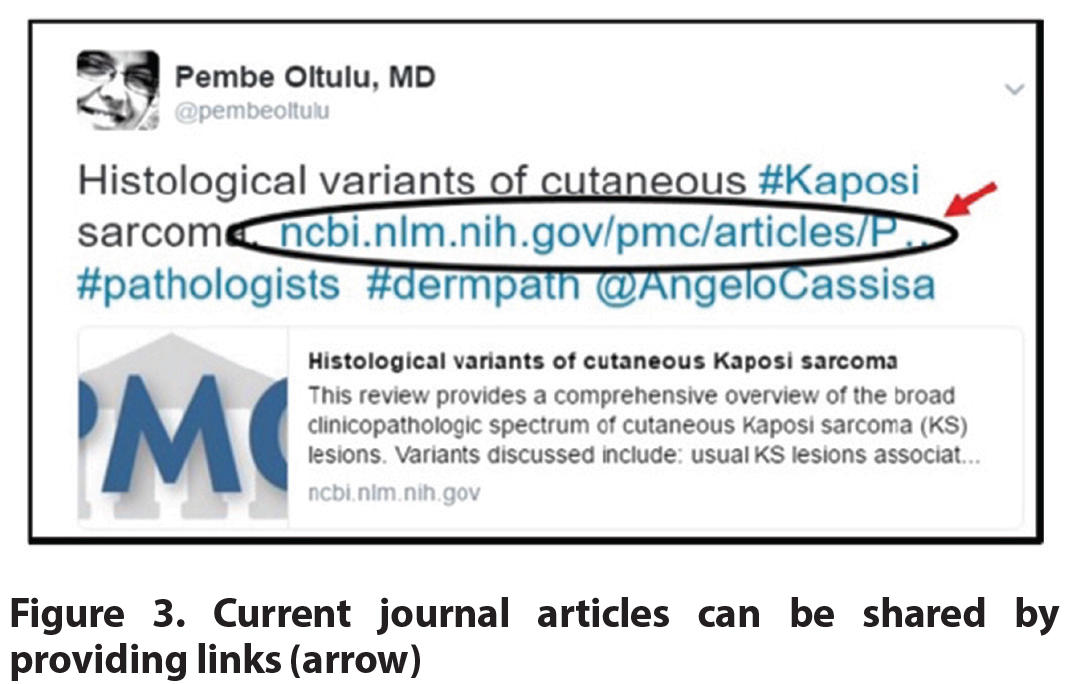
Current journal articles can be shared by providing links (). Journals that have SoMe accounts can create unique opportunities in this area (8).
Information and announcements about national and international dermatology and dermatopathology meetings and conferences can be published (2,9).
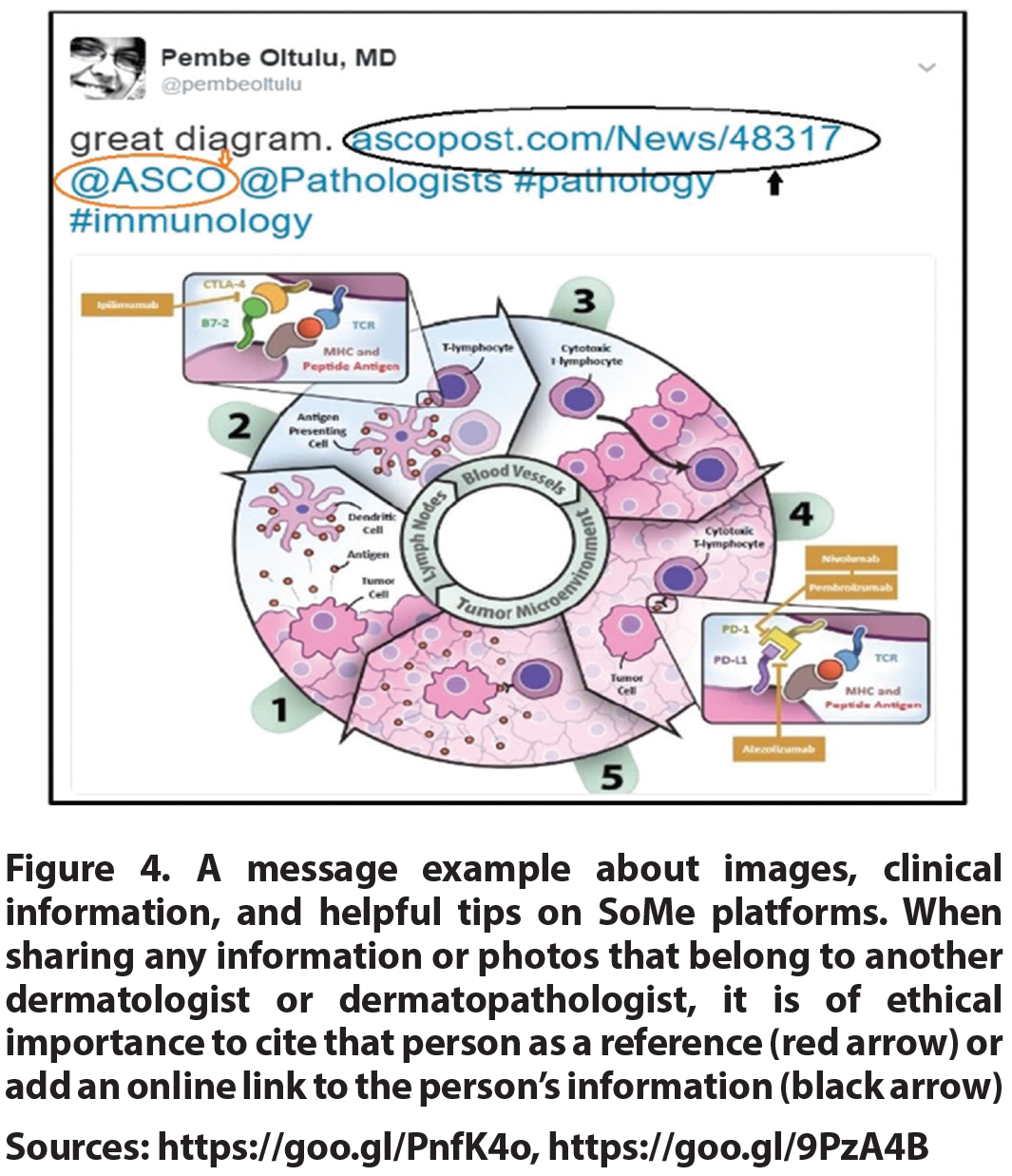
Sharing of up-to-date information (important graphics, enlightening diagrams and images, and useful tips) can contribute to professional development of dermatopathologists and dermatologists. However, while all information is shared, the name of the first owner or online link of the information must be added to the message.
Leaders and author scientists in the fields of dermatology and dermatopathology can be followed easily on SoMe, and their colleagues can benefit from their ideas even over great distances.
Questionnaires, group chats, group activities, and group albums can be created. The questionnaire button in particular is useful for conducting and publishing worldwide questionnaire studies.
Dermatologists and dermatopathologists can support each other in every topic as a result of friendships formed through SoMe with colleagues all over the world.
Important Points to Consider When Using Some Tools
SoMe tools are absolutely perfect for widespread and affordable education worldwide when used properly. However, it is very important to consider the following points:
Results and Suggestions
The use of SoMe and the total time spent on SoMe sites have increased globally in recent years. Some of the popular SoMe websites (Facebook, WhatsApp, Tumblr, Instagram, Twitter, Baidu Tieba, Pinterest, LinkedIn, Gab, Google+, Youtube, etc.) have more than 100.000.000 registered users. Thus, it is an indispensable reality that online social networking enhances communication and collaboration between people, despite some negative aspects (1). Many people learn a lot of useful information from SoMe tools. SoMe sites such as Facebook, Youtube, and Twitter also provide alternative education and communication sources for users (2,4,5).
In addition to personal use, most SoMe tools are currently used by medical professionals for professional purposes, and many articles are being written on this subject. Authors have discussed the importance of the use of smartphones and SoMe by health professionals. Smartphones, which are minicomputers that provide mobile online communication and mobile SoMe for access anywhere and anytime, represent an indispensable communication tool for many of us. For these reasons, healthcare professionals should use these devices and applications in a productive way instead of avoiding these technologies.
Dermatologists and dermatopathologists can use online SoMe tools to enhance their communication and collaboration with other colleagues, to improve scientifically, and for educational purposes (3,5,8). They can contribute to their professional development through the sharing of case-based presentations. However, they must be aware of the legal and privacy responsibilities that come along with its use. SoMe should not be used irresponsibly. The private information and images about patients should not be disclosed. Privacy and confidentiality must be protected (6,14). Our account passwords should be long and secure because of the possibility that our accounts can be seized by dangerous people. It is necessary to obtain the important information from some articles and internet sites and be extremely careful when using these tools (6,11,13,14). In our opinion, Twitter, Facebook, and Instagram are the best SoMe networks for case sharing through photos. It is an incredible reality to be able to communicate instantly with experienced professors over great distances and to benefit from their experiences. SoMe tools provide this opportunity. Youtube, Periscope, and Facebook Live instantly gather thousands of people from all over the world in a room through video sharing and live broadcasts during conferences.
There are many studies in the literature about education and SoMe tools, medicine and SoMe tools, and dermatology/dermatopathology and SoMe tools (2-10,12-14). The number of these studies is rapidly increasing over time. There are very few articles on this subject in our country and, to our best knowledge, this article is the first national article on the necessity of SoMe tools in dermatology and dermatopathology area (21-25).
In dermatology and dermatopathology practice, Twitter, international Facebook groups and other SoMe tools can be preferred. For shares with international participation, english should be used as communication language. In this way, dermatologists and dermatopathologists can be friends with many colleagues from different countries. They also can share their experiences with each other and improve their professional skills significantly after using SoMe for scientific purposes. In this article, we suggest dermatologists and dermatopathologists to use SoMe for these purposes.
Conclusion
We are continuously evolving, and technology is evolving even faster. The options for communication among people are increasing. Nowadays, SoMe is a really amazing platform for sharing information, and proper use of these platforms can contribute immensely to one’s professional development. It is clear that SoMe tools will affect and shape human communication in the future. Using these platforms correctly will help us to contribute to our professional development and to adapt quickly to extraordinary technological developments of the future. In summary, these widespread and active communication networks can contribute to the scientific and personal development of dermatologists and dermatopathologists.
Footnotes
Ethics
Peer-review: Internally peer-reviewed.
Authorship Contributions
Concept: P.O., Design: P.O., İ.Ö., Data Collection or Processing: P.O., S.F., Analysis or Interpretation: P.O., Literature Search: P.O., İ.Ö., Writing: P.O.
Conflict of Interest: No conflict of interest was declared by the authors.
Financial Disclosure: The authors declared that this study received no financial support.